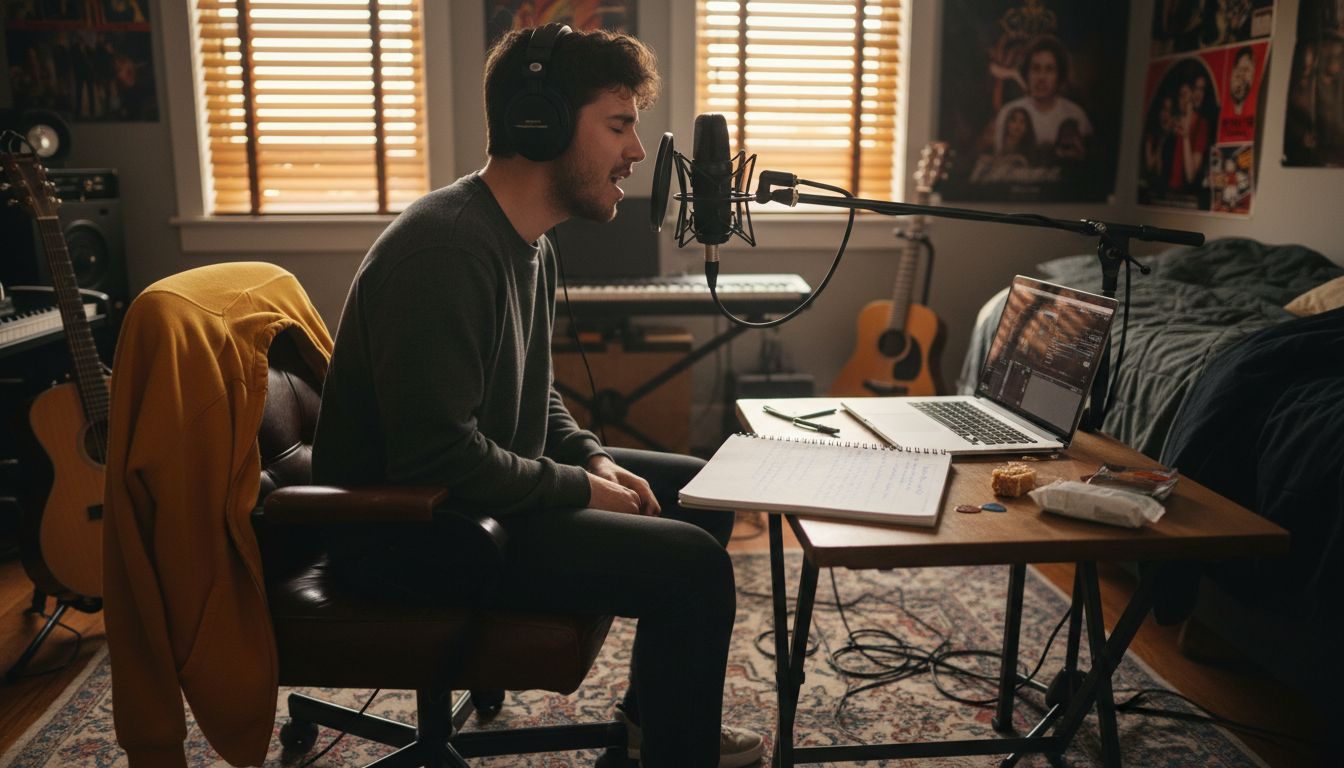


Breaking into the music industry remains one of the toughest challenges for emerging musicians worldwide in 2026. With streaming platforms saturated and attention spans shorter than ever, standing out requires more than raw talent. Success depends on both exceptional artistry and strategic fan engagement. This guide delivers practical, evidence-backed tips to help you enhance your craft, build an authentic fanbase, and navigate the industry landscape effectively. Whether you’re a female artist breaking barriers or a young male musician finding your voice, these strategies will give you a competitive edge in today’s dynamic music market.
Table of Contents
- Focus On Songwriting Quality To Build A Strong Foundation
- Build A Deeply Engaged Fanbase On One Platform First
- Understand The Music Market And Earnings Benchmarks In 2026
- Navigate Industry Nuances: Organic Growth, Networking, And Diy Vs Labels
- Explore Artist Success Packages And Resources At Naya Music
Key takeaways
| Point | Details |
|---|---|
| Prioritize songwriting quality | Write more songs than you release, create memorable hooks, and test material with non-musicians for honest feedback. |
| Build depth before scale | Focus on creating hundreds of deeply engaged fans on one platform rather than chasing large follower counts across multiple channels. |
| Choose organic growth | Avoid paid promotion gimmicks and viral chasing; authentic relationships with fans deliver sustainable career growth. |
| Understand earning benchmarks | Top 100K artists earn over $7,300 annually from Spotify alone, but multiple income streams are essential for financial stability. |
| Evaluate DIY versus label paths | Weigh creative control and independence against access to resources and industry connections when planning your career trajectory. |
Focus on songwriting quality to build a strong foundation
Your songs are your currency in the music industry. No amount of marketing can compensate for weak material. Prioritize songwriting quality by writing far more songs than you ever release. This practice sharpens your skills and gives you a catalog to choose from when it’s time to record.
Create memorable hooks and choruses that stick in listeners’ heads after one listen. These elements make or break commercial potential. Test your songs on friends who aren’t musicians, they’ll give you brutally honest feedback about whether your chorus is catchy or your verses drag. Non-musicians represent your actual audience, so their reactions matter more than industry insiders’ opinions.
Co-writing expands your creative horizons dramatically. Working with other songwriters exposes you to new chord progressions, lyrical approaches, and production ideas you wouldn’t discover alone. Study successful hits in your genre for patterns. What makes those choruses unforgettable? How do the verses build tension? Reverse engineer what works and apply those lessons to your own writing.
Consider these practical songwriting strategies:
- Write at least 20 songs before selecting your best 10 for release
- Record voice memos immediately when inspiration strikes
- Set weekly writing goals to maintain consistent output
- Analyze Billboard chart toppers in your genre monthly
- Join online songwriting communities for feedback and collaboration
Use AI tools selectively for brainstorming lyric ideas or exploring chord progressions, but never as a replacement for your authentic voice. Technology should enhance your creativity, not define it. When you’re ready to record a song as an artist, having strong material ensures your studio time and budget deliver maximum impact.
Pro Tip: Keep a running document of interesting phrases, metaphors, and concepts you encounter daily. These fragments often spark complete songs when you sit down to write.
Build a deeply engaged fanbase on one platform first
Chasing large follower numbers across every social platform is a trap that exhausts emerging artists. Instead, build depth over scale by focusing on one primary channel where you can create genuine relationships with hundreds of engaged fans. These core supporters will stream your music repeatedly, attend shows, buy merchandise, and evangelize your work to others.

Choose the platform where your target audience naturally congregates. For visual artists, Instagram or TikTok might work best. For storytellers and commentators, YouTube or a podcast could be ideal. Master that single platform before expanding elsewhere. Quality engagement beats quantity every time.
Collect email addresses religiously and nurture that list with exclusive content, early access to releases, and personal updates. Email remains the only communication channel you truly own, immune to algorithm changes or platform shutdowns. Share authentic content that reveals who you are beyond the music: behind-the-scenes content ideas like studio sessions, songwriting processes, daily life moments, and personal challenges.
Adopt ongoing cycles that keep fans connected:
- Release new music or content regularly
- Perform live shows or virtual concerts
- Engage directly through comments, DMs, and live streams
- Sell merchandise, tickets, or exclusive experiences
This cycle creates momentum and gives fans multiple ways to support you. Avoid spreading yourself too thin by trying to maintain active presences on six platforms simultaneously. You’ll burn out and produce mediocre content everywhere instead of excellent content somewhere.
| Platform Focus | Weekly Time Investment | Expected Engagement Rate | Best Content Types |
|---|---|---|---|
| Single primary platform | 10-15 hours | 5-15% of followers | Behind-scenes, performances, personal stories |
| Multiple platforms | 20+ hours | 1-3% of followers | Generic posts, rushed content |
| Email list | 2-3 hours | 20-40% open rate | Exclusive updates, early access |
Pro Tip: Set up a simple landing page with an email signup form and link it everywhere. Offer a free unreleased track or exclusive acoustic version in exchange for email addresses.
Understand the music market and earnings benchmarks in 2026
Realistic expectations prevent discouragement and help you plan strategically. The global music market is projected to reach $33.6 billion in 2026, representing significant opportunity but also intense competition. Understanding where you fit in this landscape is crucial.
Spotify’s latest data reveals that the top 100,000 artists earn over $7,300 annually from streaming royalties alone. While this might seem modest, it represents just one revenue stream. Successful independent artists combine streaming income with live performances, merchandise sales, sync licensing, crowdfunding, and direct fan support.
Independent artists typically earn about 50% royalties compared to signed artists who often receive 15-20% after label recoupment. This trade-off reflects the resources labels provide versus the control and earnings independence offers. Women artists represented 36.1% of Hot 100 chart entries in recent data, slightly down from previous years, highlighting ongoing representation challenges in mainstream music.
Key market realities to internalize:
- Streaming alone rarely provides full-time income for emerging artists
- Multiple revenue streams are essential for financial sustainability
- Building to 100,000 monthly Spotify listeners takes most artists 2-5 years
- Live performance and merchandise often generate more income than streaming initially
- Geographic location affects earning potential due to varying streaming rates
“The expanding musical middle class shows more artists are earning sustainable income, but success requires diversified revenue and patient, strategic growth over years, not months.” – Industry analysis 2026
| Income Stream | Typical Monthly Earnings (1000 fans) | Time to Build | Control Level |
|---|---|---|---|
| Streaming royalties | $50-200 | 12-24 months | Medium |
| Live performances | $200-1000 | 6-18 months | High |
| Merchandise sales | $100-500 | 6-12 months | High |
| Sync licensing | $0-5000 (sporadic) | 12-36 months | Low |
These benchmarks help you set realistic milestones and celebrate progress appropriately. Reaching 10,000 monthly listeners is a genuine achievement worth recognizing, even if it doesn’t pay your rent yet.
Navigate industry nuances: organic growth, networking, and DIY vs labels
The path to music industry success involves strategic choices about how you grow and who you partner with. Prioritize organic fan growth over paid promotion or chasing viral moments. Purchased followers and bot streams damage your credibility and algorithmic performance. Authentic growth takes longer but builds a foundation that sustains your career.
Networking remains crucial for both young male and female artists, though women often face additional barriers in male-dominated industry spaces. Attend industry events, collaborate with peers, engage genuinely with other artists online, and build relationships without transactional expectations. Your network becomes your support system, collaboration pool, and opportunity pipeline.
The DIY versus label decision represents a fundamental career crossroads. DIY independence gives you complete creative control, higher royalty percentages, and ownership of your masters. However, you shoulder all costs, handle business operations yourself, and lack industry connections and resources. Record labels offer substantial budgets, industry expertise, distribution power, and promotional reach, but typically require giving up significant control and ownership.
Consider these factors when evaluating your path:
- Your comfort level with business operations and self-promotion
- Available personal budget for recording, marketing, and distribution
- Career timeline and patience for gradual versus accelerated growth
- Importance of creative control versus access to top-tier producers and collaborators
- Long-term vision for ownership and legacy
Many successful artists start DIY to build leverage and prove their market viability before approaching labels from a position of strength. This strategy lets you negotiate better terms and maintain more control even within a label structure. Others remain fully independent throughout their careers, building sustainable businesses on their own terms.
Pro Tip: If you do sign with a label, hire an entertainment attorney to review contracts. Never sign anything without legal counsel, regardless of how exciting the opportunity seems.
When considering the record label contract process, understand that labels invest in artists they believe will generate returns. Building your fanbase and streaming numbers independently makes you a more attractive signing. Explore emerging artist launch strategies that help you develop professionally while maintaining independence.
Comparison of DIY independence versus label support for emerging artists
Understanding the trade-offs between independent and label-supported careers helps you make informed decisions aligned with your goals and values. Neither path is inherently superior; the right choice depends on your priorities, resources, and vision.
| Factor | DIY Independence | Record Label Support |
|---|---|---|
| Creative control | Complete control over sound, image, release schedule | Shared control; label input on singles, production, branding |
| Revenue share | 50-100% of royalties after distribution costs | 15-20% of royalties after recoupment of advances |
| Upfront costs | Self-funded; $2,000-10,000+ per release | Label-funded; advances cover recording and marketing |
| Marketing reach | Limited to personal budget and organic growth | Access to radio promotion, playlist pitching, PR firms |
| Release speed | Full flexibility; release whenever ready | Scheduled around label priorities and market timing |
| Industry connections | Build gradually through personal networking | Immediate access to producers, collaborators, industry gatekeepers |
| Master ownership | You own your recordings permanently | Label typically owns masters for contract duration or perpetually |
| Business responsibilities | Handle all contracts, accounting, distribution, legal | Label manages business operations; you focus on artistry |
| Career risk | All financial risk on you; slower growth | Label absorbs financial risk; faster potential growth |
This comparison clarifies that DIY independence suits artists who value control and ownership over rapid scaling, while label support benefits those willing to trade equity for resources and industry access. Many artists blend both approaches at different career stages, starting independent and later partnering strategically with labels for specific projects or markets.
Explore artist success packages and resources at Naya Music
Navigating the music industry alone can feel overwhelming, especially when you’re trying to balance artistry with business strategy. Naya Music offers tailored artist success packages designed specifically for emerging musicians at various career stages. These packages provide comprehensive support spanning songwriting development, professional recording, strategic marketing, and authentic fan engagement.
Whether you’re just starting out or ready to scale your existing fanbase, explore convenient options in the artist success shop that match your budget and goals. The emerging artist launch package is particularly valuable for musicians building their foundation, offering guidance that complements organic growth strategies while accelerating professional development. Connect with a team that understands 2026 industry trends, challenges facing female and young male artists globally, and proven pathways to sustainable music careers.
Frequently asked questions
What are the most critical skills emerging musicians should focus on?
Songwriting quality stands above all other skills because great songs open every door. Develop authentic fan engagement abilities through consistent, genuine communication on social platforms. Networking skills help you build industry relationships that lead to collaborations and opportunities. Understanding basic music business concepts like royalties, contracts, and distribution protects you from exploitation and helps you make informed career decisions.
How can emerging musicians grow an authentic fanbase without paid promotion?
Focus your energy on one social platform where you can deeply engage fans through behind-the-scenes content, personal stories, and consistent interaction. Build an email list for direct communication that no algorithm can interrupt. Share your creative process, struggles, and victories to create genuine connections. Release music regularly and perform live whenever possible to give fans reasons to stay engaged. Authentic growth takes longer but creates loyal supporters who sustain your career.
What is the best way to balance independence with label support?
Start by honestly assessing your need for creative control versus access to resources and industry connections. Many artists begin DIY to build leverage, then approach labels once they’ve proven market viability. This strategy lets you negotiate better contract terms from a position of strength. If you do consider label offers, hire an entertainment attorney to review every clause. Research the label’s track record with similar artists and ask tough questions about creative input, ownership, and recoupment terms.
How important is testing songs with non-musicians?
Testing songs with non-musicians is critically important because they represent your actual audience. Industry professionals and fellow musicians often evaluate songs through technical lenses that don’t reflect how regular listeners experience music. Non-musicians give honest feedback about whether your hook is catchy, your verses are engaging, or your song drags. Their reactions predict commercial appeal better than expert opinions, helping you select your strongest material for release.

